SHARE THIS:
THOUGHT LEADERSHIP
From Displacement to Dignity:
How Blended Finance Can Unlock Housing for Nigeria's Forgotten Millions
Nigeria hosts one in ten of the world's internally displaced persons. For three million Nigerians uprooted by conflict, climate shocks, and insecurity, a roof is not merely shelter — it is the first step back to citizenship. The question is no longer whether we act, but how we finance action at scale.
by
Ahmed Baba
Family Homes Funds Limited (FHFL)
The Crisis Within the Crisis
Nigeria is living through two simultaneous housing emergencies, and they are rarely spoken about in the same breath. The first is well-documented: a structural deficit of more than 28 million housing units — the product of decades of under investment, rapid urbanisation, and a mortgage system that has effectively served less than one per cent of the people it was designed to help. The second is less visible but no less severe: the acute shelter deprivation faced by the more than 3.5 million Nigerians currently displaced by conflict, violence, and climate-related disasters — a figure that represents roughly one in every ten internally displaced persons on the planet.
These two crises are not parallel. They are nested. Internally displaced persons (IDPs) arrive in a housing market that was already broken before they came. High interest rates, collateral requirements, informal income streams, and a homeownership rate that has collapsed from 30 per cent in 2019 to just 20 per cent today — these are the barriers that already exclude Nigeria's working poor from formal shelter. For IDPs, every one of these barriers is compounded by the additional weight of displacement: no land title, no credit history, no employer to vouch for them, and in many cases, no stable address from which to begin rebuilding.
The humanitarian system has tried to bridge this gap. Emergency shelters, transitional camps, and scattered resettlement projects in states such as Borno and Benue have provided temporary relief. But temporary has a way of becoming permanent when there is no pathway beyond it. Without tenure security, without access to finance, and without integration into the broader urban fabric, displaced Nigerians can remain in a state of permanent temporality — housed in name but excluded in every practical sense.
The consequences extend far beyond the individuals affected. When a third of a city's population lives in informal, unserved settlements — whether they arrived there through displacement — that city's economy, its public health system, its social cohesion, and its tax base all suffer. Exclusion is not just a moral failure. It is an economic inefficiency that scales.
|
"For IDPs, every barrier to housing is compounded by displacement. No land title. No credit history. No stable address. Temporary has a way of becoming permanent when there is no pathway beyond it." |
The Affordability Trap: Understanding the Economics of Exclusion
To understand why IDP housing has proven so intractable, it is necessary to understand the structural economics of housing exclusion in Nigeria. The picture is stark.
Nigerian households today spend between 50 and 60 per cent of their total expenditure on food alone, leaving almost nothing for savings, investment, or housing. Inflation reached a 28-year high of nearly 34 per cent in 2024. The naira has lost more than 150 per cent of its value against the dollar in two years, falling from an average of ₦638.8 in 2023 to over ₦1,596 by mid-2025. Fuel prices have increased by over 250 per cent. Against this backdrop, Nigeria's mortgage interest rates — ranging from 15 to 27 per cent — are not merely unattractive; they are mathematically incompatible with the financial realities of many Nigerians.
The Federal Mortgage Bank of Nigeria (FMBN) has over 5.47 million subscribers to the National Housing Fund. Since its founding in 1997, it has provided mortgages to less than one per cent of them. The Nigerian Mortgage Refinance Company is making incremental progress — refinanced loans increased by 13.8 per cent in 2022 — but with only 24,654 active FMBN mortgages as of August 2023, the gap between the instrument and the scale of the need is not a margin of error. It is a structural failure.
The consequence is that over 80 per cent of Nigerians now live in rented accommodation, with millions more in informal settlements or unfinished housing. For displaced populations, the situation is even more acute. They are, by definition, outside any housing register, any credit system, and almost any government programme. State Action Plans on Durable Solutions for displaced populations acknowledge housing needs — but implementation has been underfunded, inconsistent, and almost entirely disconnected from national housing policy.
The lesson is clear: the conventional mortgage-and-construction model cannot solve this problem. Not because housing finance is impossible, but because the financial products available were designed for a population profile that does not describe most Nigerians — and certainly does not describe the displaced.
|
Key Structural Failures in Nigeria's Housing System • Less than 1% of 5.47M NHF subscribers have ever received an FMBN mortgage • Mortgage interest rates of 15–27% are structurally incompatible with most household incomes • Naira depreciation of over 150% in two years has eroded purchasing power and driven up construction costs • State Durable Solutions Action Plans acknowledge IDP housing needs, but implementation has been sporadic and underfunded • Private sector affordable housing schemes rarely extend to displacement-affected communities • No scalable, systemic framework currently integrates IDPs into national housing and urban development strategies |
Blended Finance: The Bridge That Conventional Models Cannot Build
At Family Homes Funds Limited (FHFL), we have spent several years asking a deceptively simple question: what would it take to make IDP housing bankable? The answer, we have come to believe, lies not in charity — and not in the unaided market — but in the intelligent combination of both. That combination has a name: blended finance.
Blended finance is not a new concept in development economics. But its application to IDP-inclusive affordable housing in Nigeria has, until recently, been more theoretical than practical. The core principle is straightforward: by strategically layering concessional capital — grants, subsidised loans, guarantees from development finance institutions (DFIs), and government funds — alongside commercial equity and debt, a project's overall cost of capital is reduced, its risk profile is restructured, and what appeared unbankable becomes investable.
FHFL has already demonstrated this principle in its core business. Our signature affordable mortgage product — offering interest rates meaningfully below market — was made possible by blending Federal Government impact capital, concessional debt from the African Development Bank, and commercial investment from private mortgage companies. The result was not just a cheaper loan product; it was a fundamentally different model, one in which the architecture of the financing itself does the work that no single institution or instrument could do alone.
We are now applying the same logic — with greater ambition and complexity — to the challenge of IDP housing through a proposed mixed-use affordable-housing pilot.
|
"Blended finance is not charity, and it is not the market. It is what happens when public purpose and private capital are structured intelligently enough to serve both." |
The Mixed-Use Estate Model: Building Inclusion Into the Foundations
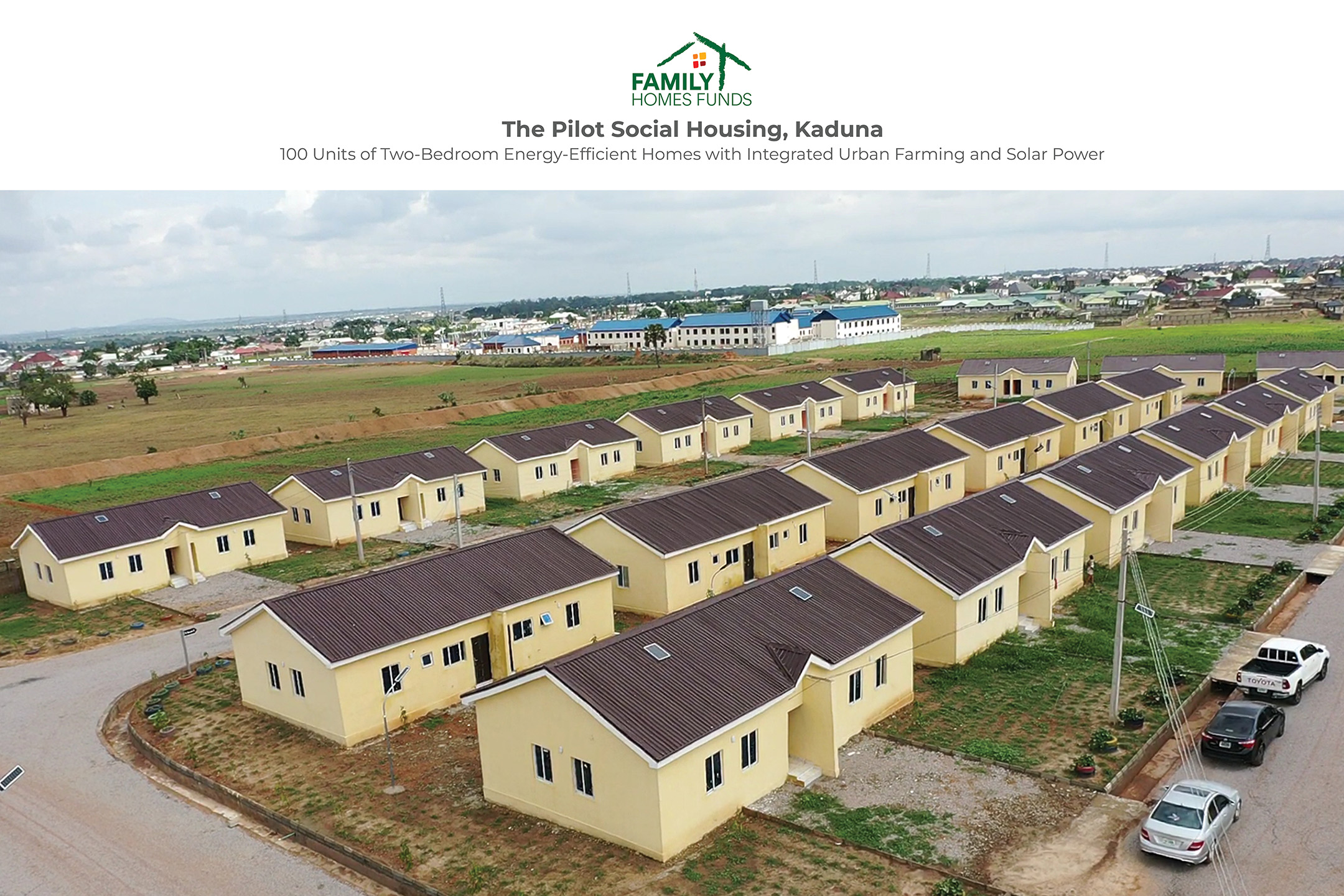
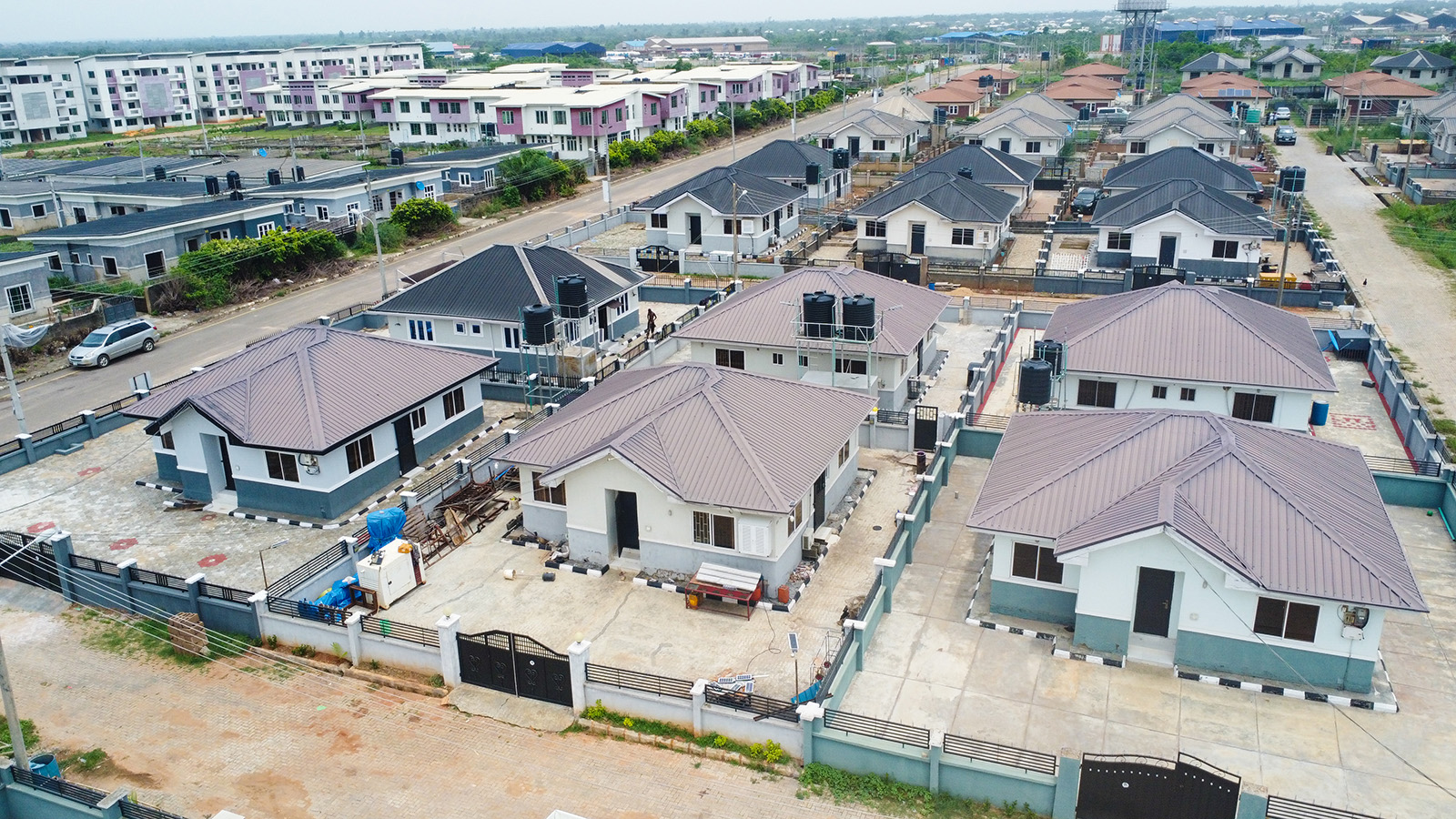
The pilot we have developed, in partnership with international organisations including the United Nations and the Norwegian Refugee Council, is predicated on a cross-subsidisation model that is as architecturally deliberate as it is financially disciplined. The logic is this: a mixed-income, mixed-use estate can be designed so that the profits generated by market-rate residential units and commercial spaces actively subsidise the cost of affordable and social housing for displaced and low-income residents within the same development.
Approximately 30 to 40 per cent of units in each estate would be allocated to vulnerable households — IDPs, returnees, and low-income urban families — through a combination of rent-to-own schemes, income-adjusted social housing, and targeted housing vouchers. These households would benefit from a five-to-eight-year moratorium on mortgage repayments, providing the financial breathing space required to stabilise livelihoods before repayment obligations begin. The remaining units — mid-market and upper-market housing alongside commercial retail and services — are positioned to deliver returns attractive enough to draw private equity and commercial debt into the structure.
The financing stack for such a pilot combines concessional loans and guarantees from DFIs and national housing funds; private equity and commercial debt for market-rate components; donor grants and philanthropic capital for social housing subsidies and early-stage infrastructure; and participation from cooperatives and microfinance institutions for flexible small-scale loans to displaced and informal-sector households. At least 25 per cent of estate infrastructure and services costs would be covered by commercial profits — reducing dependency on public subsidy and building in long-term financial sustainability.
Critically, the model is designed not merely to house people but to build capacity at every level of the system. Local and state governments — often the closest actors to displacement-affected communities, yet the most poorly equipped to respond — will receive targeted technical assistance in spatial planning, inclusive land-use policy, and land-based financing mechanisms such as land value capture, betterment levies, and development impact fees. This is not peripheral to the model. It is central to it because housing at scale cannot happen without local government as an active institutional partner rather than a passive bystander.
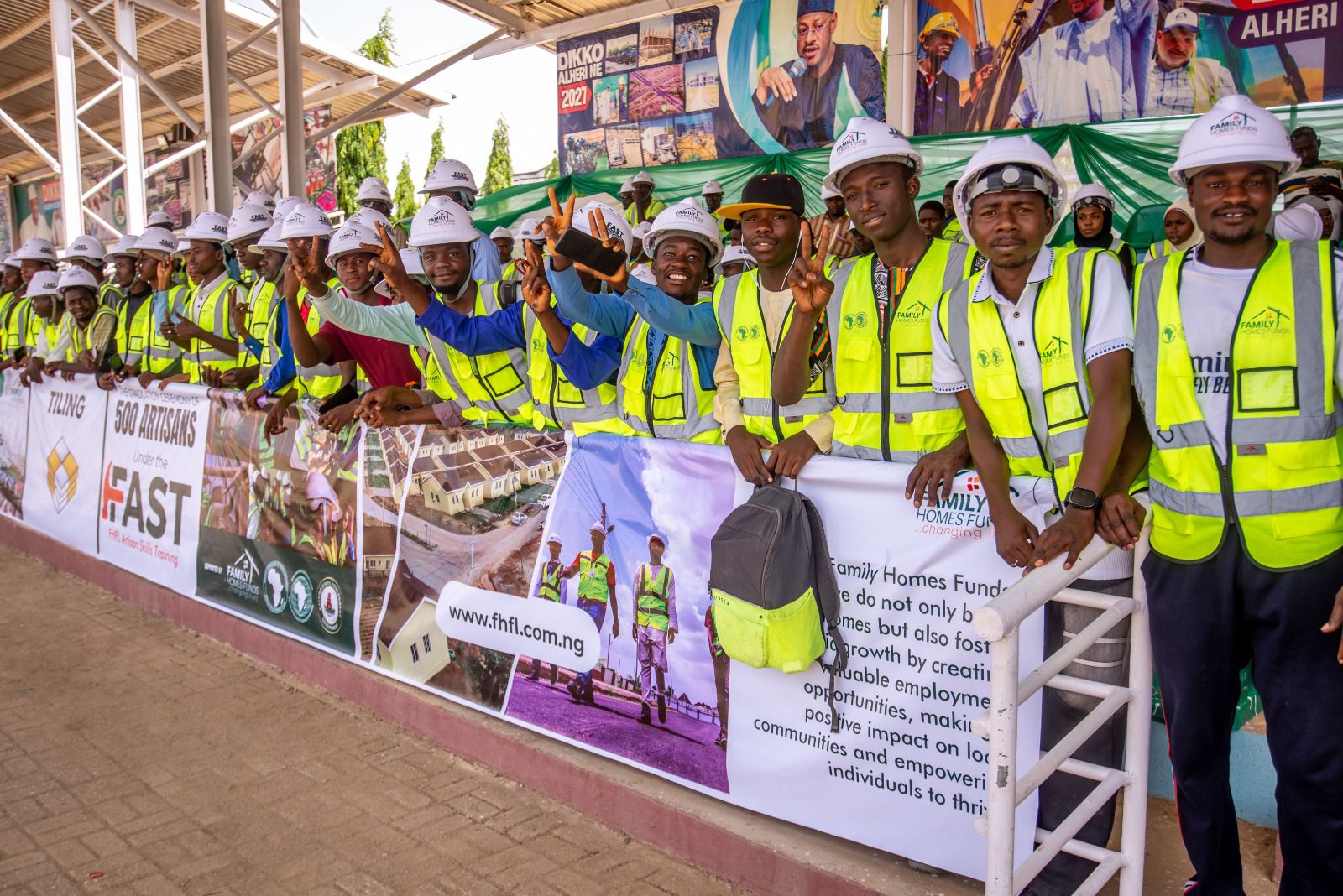
The development is also designed to be an economic engine, not just a residential address. By integrating vocational training programmes, skills acquisition pathways for youth artisans, schools, clinics, and market spaces within the estate, the model creates the conditions for displaced populations to participate in economic life — not as beneficiaries of charity, but as workers, entrepreneurs, and community members.
|
The Mixed-Use Estate Model at a Glance • 30–40% of units allocated to IDPs and low-income households through rent-to-own and subsidised social housing • 5–8-year mortgage moratorium for vulnerable households to stabilise incomes before repayment begins • Cross-subsidy: at least 25% of estate infrastructure funded through market-rate housing and commercial profits • Blended capital: DFI concessional loans + private equity + donor grants + cooperative microfinance • Technical assistance to local governments on spatial planning and land-based financing mechanisms • Integrated economic components: vocational training, youth apprenticeships, community services, retail • Post-pilot pathway: bond issuances and REIT structures for national scale-up |
What Makes This Investable — and Why It Matters
Development finance professionals are familiar with the tension between impact and returns. The proposition we are advancing is that, in the context of affordable housing, this tension is partly a product of how projects have historically been structured — not an inherent feature of the asset class. Affordable housing in fast-urbanising, high-deficit environments can deliver stable long-term yields. Land appreciates. Rental income is recurring. Mixed-income developments, when properly designed, are resilient because they are not dependent on a single income stratum.
For private equity investors, the pilot offers returns generated through the market-rate and commercial components of the estate, protected by a blended financing structure that absorbs the first-loss risk in the affordable and social housing segments. For DFIs and bilateral donors, it offers a vehicle through which concessional capital is leveraged to a multiple of its face value — not spent but structured. The government offers a model that reduces reliance on direct public expenditure while delivering measurable outcomes in housing provision, financial inclusion, and social stability. And for the families who will live in these estates — including those who arrived as displaced persons — it offers something that no financial model alone can capture: a pathway from precarity to permanence.
The pilot is conceived as a proof of concept, but with deliberate scale-up architecture built in from the beginning. Once the model is validated, FHFL intends to explore bond issuances and Real Estate Investment Trust (REIT) structures to mobilise capital at the institutional scale that Nigeria's housing deficit demands. The aspiration is not one estate in one city. It is a replicable model, underpinned by a government-led Affordable Housing Roadmap, that can be adapted to the specific geographic, demographic, and socio-economic contexts of displacement-affected communities across the country.
|
"The tension between impact and returns in housing is partly a product of how projects have been structured — not an inherent feature of the asset class. We are restructuring the question." |
Four Conditions for Success
In our experience at FHFL, and in the collaborative work we have done with the UN, the Norwegian Refugee Council, and other development partners, the difference between a housing pilot that works and one that does not usually comes down to four conditions. These are not aspirational. They are operational.
First, strong institutional coordination. The most technically elegant, blended finance structure will fail without aligned incentives and transparent risk-sharing among government agencies, financiers, humanitarian organisations, and implementing partners. In the context of IDP housing, this means connecting the humanitarian coordination system — which understands displaced populations — with the national housing policy architecture — which controls the instruments of delivery. These two worlds rarely talk to each other. Making them talk is not a technical problem. It is a political and institutional one, and it requires sustained leadership at the highest levels of government.
Second, enabling policy and regulation. Private capital will not enter a market with an uncertain legal and regulatory environment. For IDP-inclusive housing, this means clarity on tenure rights for displaced households, a supportive framework for alternative financing instruments such as cooperative loans and rent-to-own arrangements, and incentive structures that reward private developers for including affordable units rather than simply tolerating them. Nigeria has many of the necessary regulatory foundations in place. What is required is their coherent application to this specific challenge.
Third, technology-driven solutions. Housing finance for displaced populations faces a fundamental information problem: lenders cannot assess creditworthiness because IDPs lack the documentation, bank history, and formal employment records that conventional underwriting requires. Technology offers a partial solution — through digital income verification, mobile-based repayment platforms, satellite monitoring of construction progress, and biometric beneficiary profiling that does not depend on paper-based identity documents. Integrating these tools is not optional. It is the mechanism through which the invisible credit risk of displaced borrowers becomes visible and manageable.
Fourth, skills, empowerment, and economic participation. A house without a livelihood is a waiting room. The most durable housing solutions we have seen are those in which residents are also economic participants — employed in the construction of their own homes, trained in skills that are in demand in the local economy, and connected to financial products that allow them to save, invest, and grow. Our pilot integrates vocational training and apprenticeship programmes precisely because we believe that the pathway from displacement to dignity is not just through a front door. It is through a paycheque.
An Invitation to Build Something That Lasts
Nigeria is at a defining moment in its housing history. The combination of macro-economic pressure, demographic momentum, and the scale of displacement creates conditions that demand institutional courage — the willingness to move beyond incremental adjustments and pilot genuinely new models.
FHFL is not proposing to solve the IDP housing crisis alone. We are proposing to build, with partners who share our conviction that inclusive housing is both a moral imperative and a bankable asset class, the proof of concept that demonstrates this at scale. We are doing so in partnership with the United Nations, the Norwegian Refugee Council, and state governments committed to durable solutions for their displaced populations. And we are doing so with the explicit intent that every lesson learned, every model validated, and every financial instrument tested becomes a public good — available for replication by any government, institution, or investor that chooses to follow.
The opportunity is real. The tools are available. The financing architecture can be built. What remains is the partnership.
If you are a development finance institution seeking to deploy concessional capital into housing markets that conventional lenders will not touch, this is your vehicle. If you are a private equity investor seeking stable, long-term yields in a high-growth demographic market, this is your entry point. If you are a philanthropic foundation or donor agency committed to durable solutions for displacement, this is how your grant capital gets leveraged to a multiple of its face value. And if you are a Nigerian state government sitting on land, facing acute housing needs, and looking for a model that does not require you to solve the problem with your budget alone, we are ready to talk.
Displacement is not a permanent condition. But it becomes one in the absence of systems designed to make permanence possible. We are building those systems. We invite you to build them with us.
ABOUT THE AUTHOR
Ahmed Baba is the Technical Assistant to the Managing Director and Chief Executive Officer of Family Homes Funds Limited (FHFL), Nigeria's leading government-backed housing finance institution. FHFL has financed over 18,000 homes, created more than 100,000 jobs, and delivered 8,600 student bed spaces across Nigeria. Ahmed leads the Non-Interest Finance Unit (NIFU) and the Social Housing Programme (SHP) under its Ethical Fund framework, mobilising capital from DFIs, multilateral partners, and capital markets to deliver affordable housing at scale. Ahmed is a leading voice on affordable housing finance, blended capital structures, and inclusive urban development in sub-Saharan Africa. FHFL is currently developing a mixed-use affordable housing pilot for internally displaced persons and low-income communities in partnership with the United Nations, the Norwegian Refugee Council, and state government partners.
ABOUT FAMILY HOMES FUNDS LIMITED
Family Homes Funds Limited (FHFL) is a Federal Government of Nigeria institution established to address the nation's housing deficit through innovative, inclusive, and sustainable housing finance solutions. | www.fhfl.com.ng | info@fhfl.com.ng
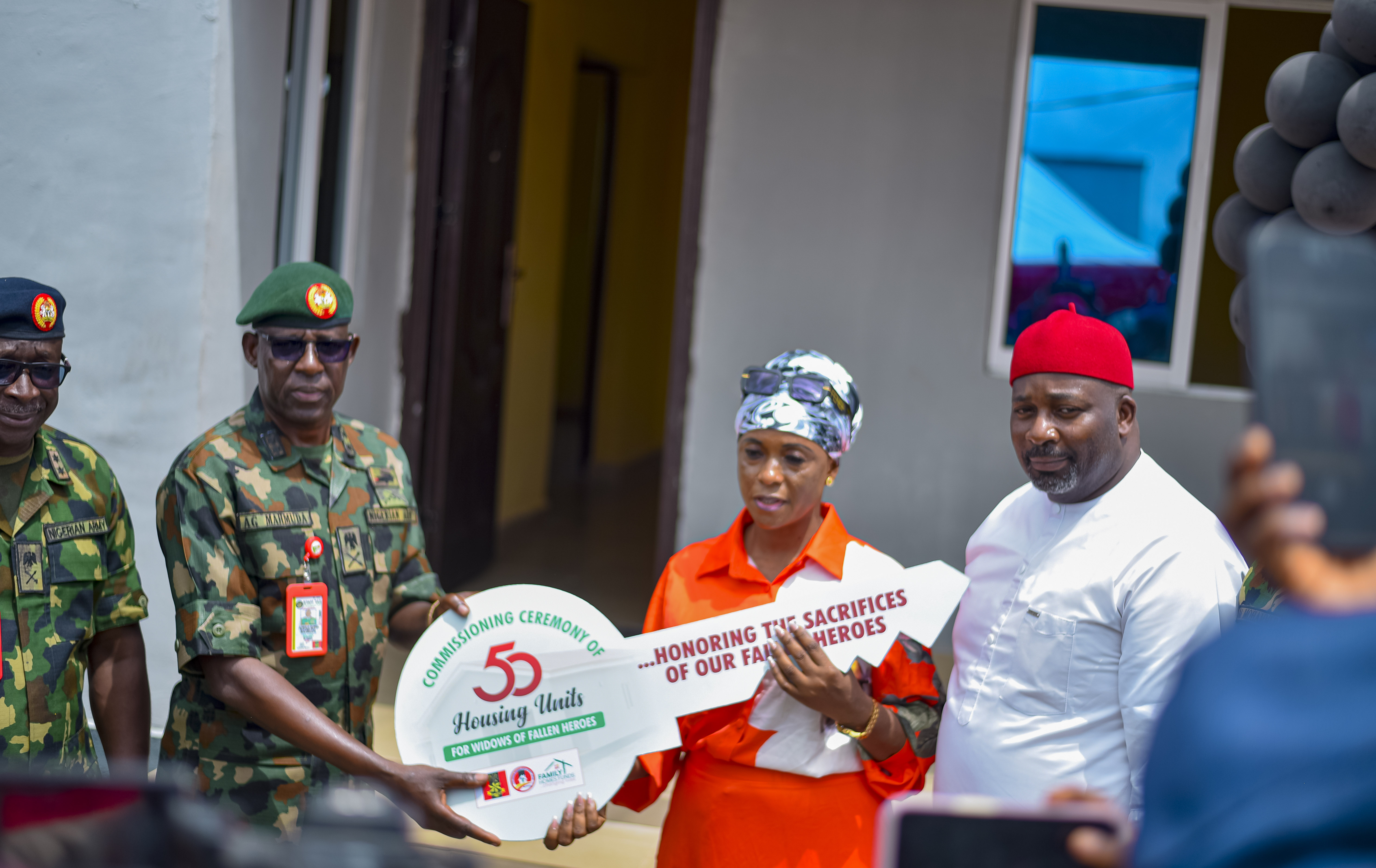
A new chapter in Nigeria’s commitment to honouring the sacrifice of its fallen heroes was marked today, Tuesday, 29 September 2026, as Family Homes Funds Limited (FHFL), in partnership with Post-Se...
September 29, 2026
On Thursday, the 3rd of September 2026, after sustained engagement and strategic alignment between both institutions, the Rural Electrification Agency (REA) and Family Homes Funds Limited (FHFL), a sp...
September 04, 2026
In a significant demonstration of its commitment to social impact and inclusive housing delivery, Family Homes Funds Limited (FHFL) formally handed over 50 units of two-bedroom detached, energy-effic...
July 17, 2026
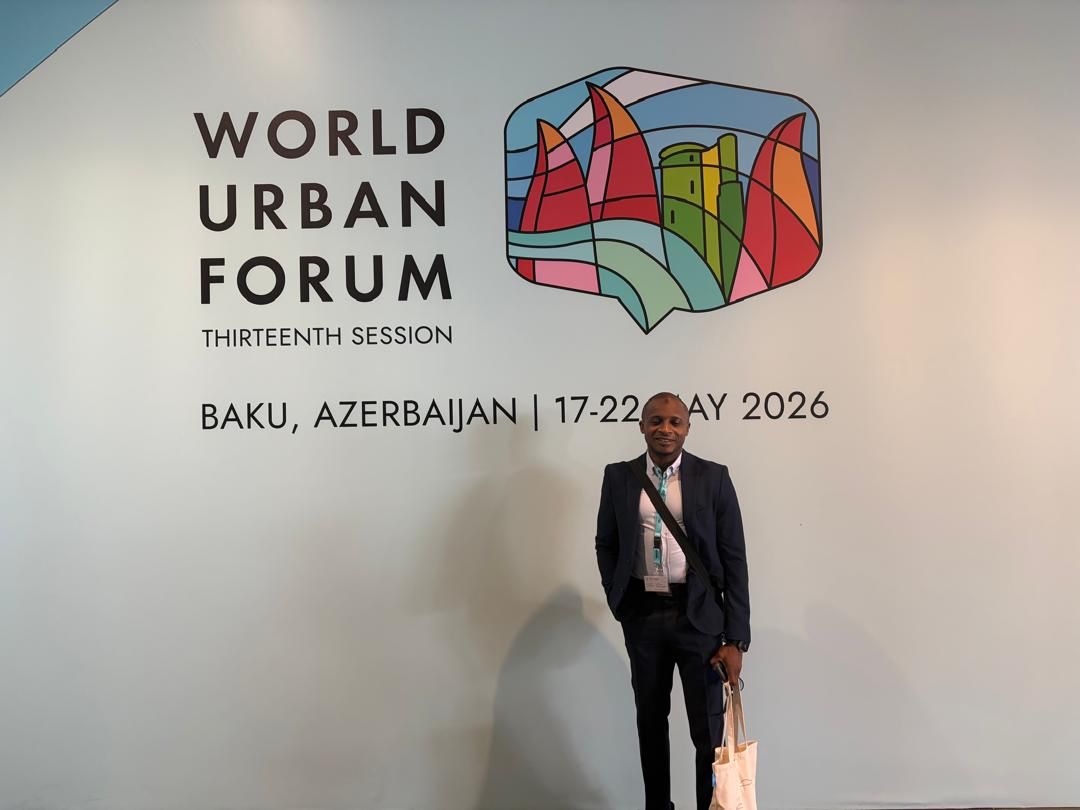
Family Homes Funds Limited (FHFL) participated in the 13th World Urban Forum (WUF13), convened by the United Nations Human Settlements Programme (UN-Habitat) in Baku, Azerbaijan, from 17–22 May 202...
June 02, 2026
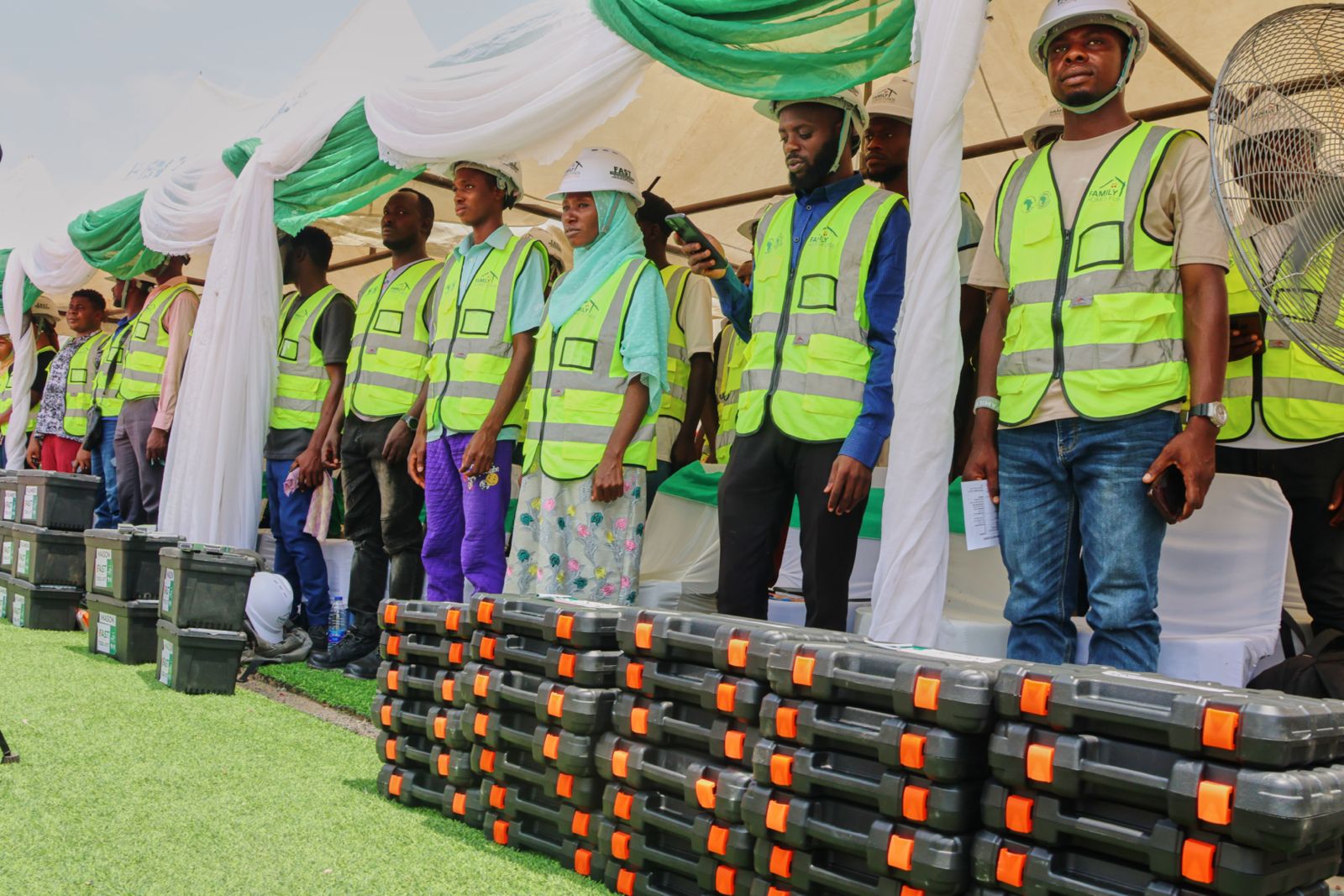
Family Homes Funds Limited (FHFL) has successfully graduated 572 artisans under its Skills Acquisition Programme, with 72 Abuja-based beneficiaries securing automatic employment through the Renewed H...
May 13, 2026
THOUGHT LEADERSHIP From Displacement to Dignity:How Blended Finance Can Unlock Housing for Nigeria's Forgotten MillionsNigeria hosts one in ten of the world's internally displaced persons. For three ...
May 12, 2026
It was a joyous moment in Katsina State as Family Homes Funds Limited (FHFL) celebrated the graduation of 500 artisans under its Skills Acquisition Training Programme, popularly known as ‘FAST’. ...
May 06, 2026
The Federal Government is advancing a strategic partnership with China to accelerate affordable housing delivery and address Nigeria’s growing housing deficit through technology-driven and scalable...
April 28, 2026
On 31 March, the Board of Directors of Family Homes Funds Limited (FHFL), led by the Chairman, Mr. Ademola Adebise, convened its Annual General Meeting (AGM) and Shareholders’ Meeting to review per...
March 31, 2026
The formal ground-breaking ceremony for the student housing development at the Enugu State University of Science and Technology (ESUT) was held on 25 March 2026, marking a significant milestone under...
March 25, 2026
FHFL closed the year by investing in what matters most; people. Beyond delivering physical housing, the Fund reaffirmed its commitment to holistic development through targeted capacity-building initi...
January 20, 2026
Changing Lives, Renewing Hope: 100 Widows Become Homeowners in Kaduna ‘I have come with my bag; me and my four children are sleeping in the new house today!’ - Joy Aminu. Excitement and relief fi...
November 28, 2025